
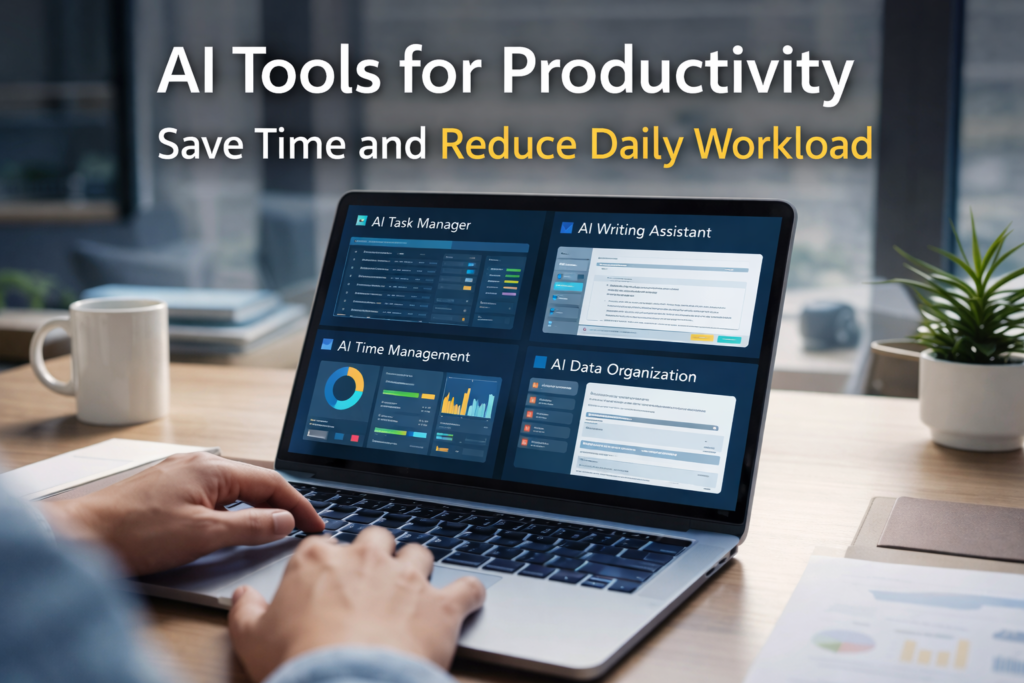
Productivity today is not about working longer hours. It is about using the right tools to reduce mental load, avoid repetitive tasks, and focus on high-value work. This is where AI tools for productivity are making a real difference.
From planning your day to managing emails and organizing information, AI tools are quietly becoming digital assistants for professionals, students, freelancers, and creators.
In this guide, I’ll share 7 practical AI tools for productivity, based on real usage and everyday work scenarios, not hype.
1. AI Task Management Tools
AI-powered task managers help you organize your work based on priority, deadlines, and energy levels.
How it helps in real life:
Instead of manually deciding what to do first, AI analyzes your tasks and suggests what actually matters today.
Best use cases:
- Daily planning
- Busy professionals
- Students managing multiple subjects
Why it improves productivity:
You spend less time planning and more time executing.
2. AI Writing Assistants for Daily Work
Writing emails, reports, or documentation consumes a surprising amount of time. AI writing tools help you draft clear and professional content faster.
Real-world example:
Drafting a professional email that usually takes 15 minutes can be done in under 3 minutes with AI assistance.
Best use cases:
- Office emails
- Client communication
- Blog outlines and summaries
3. AI Note-Taking and Information Organization Tools
AI note tools automatically summarize meetings, articles, and research material into short, useful notes.
Why this matters:
Information overload is a productivity killer. AI helps filter what’s important.
Best use cases:
- Students
- Researchers
- Meeting-heavy jobs
4. AI Time Management and Scheduling Tools
These tools analyze your calendar and suggest optimal time blocks for deep work, meetings, and breaks.
Real experience insight:
Users often realize they were overbooking meetings without realizing how much focus time they were losing.
Productivity benefit:
Better balance, less burnout, and improved focus.
5. AI Tools for File and Data Organization
Searching for files wastes more time than most people realize. AI-powered file tools automatically categorize documents and make them searchable.
Example:
Finding a contract or project file in seconds instead of minutes.
Best use cases:
- Freelancers
- Remote workers
- Small teams
6. AI Automation Tools for Repetitive Tasks
Automation tools handle repetitive actions like data entry, report generation, and workflow triggers.
Why professionals love this:
It removes boring tasks and frees time for creative or strategic work.
Common automations include:
- Copying data between apps
- Sending reminders
- Updating spreadsheets automatically
7. AI Tools for Focus and Distraction Control
Some AI tools analyze your work patterns and gently block distractions during focus sessions.
Real benefit:
You become aware of time leaks like excessive app switching or unnecessary browsing.
Ideal for:
- Deep work sessions
- Exam preparation
- Creative tasks
Common Mistakes People Make with AI Productivity Tools
Many users install AI tools but don’t see results because:
- They try too many tools at once
- They don’t integrate tools into daily routines
- They expect instant results without habit changes
AI works best when used consistently and intentionally.
Final Thoughts
AI tools for productivity are not about replacing human effort. They are about removing friction from daily work.
When used correctly, these tools help you:
- Save time
- Reduce mental stress
- Focus on meaningful work
Start with one tool, master it, and then slowly expand. Productivity is a system, not a shortcut.
If you want to explore more AI tools and practical guides, keep visiting this site. Upcoming posts will go even deeper into real-world AI usage.